Science-Based Targets Initiative SBTi
Science-based targets provide a rigorous, data-driven roadmap for companies to align their carbon reduction strategies with the Paris Agreement’s goal of limiting global warming to 1.5°C.
By grounding sustainability efforts in climate science rather than arbitrary benchmarks, organizations can ensure their decarbonization journey is both impactful and transparent.
In 2021, Anticimex joined the Science Based Targets initiative (SBTi) and submitted detailed targets that were officially validated in 2023, reinforcing the company's role in the global transition to a net-zero future.
Reducing the impact through preventive pest control
Reducing environmental impact is a priority for Anticimex. Our approach focuses on preventive, data-driven SMART pest prevention, designed to reduce the need for reactive treatments and lower overall resource use in pest management. By preventing infestations and property damage, we help minimize environmental impact and deliver more efficient, sustainable pest prevention solutions.
We are also actively reducing emissions across our own operations through the electrification of our vehicle fleet and increased use of renewable electricity in our facilities. While our priority is to reduce emissions within our value chain, we recognise that addressing climate change is a shared global responsibility. Therefore, we also support broader initiatives that contribute to climate mitigation beyond our own operations, alongside our continued focus on direct emission reductions.
The power of early detection
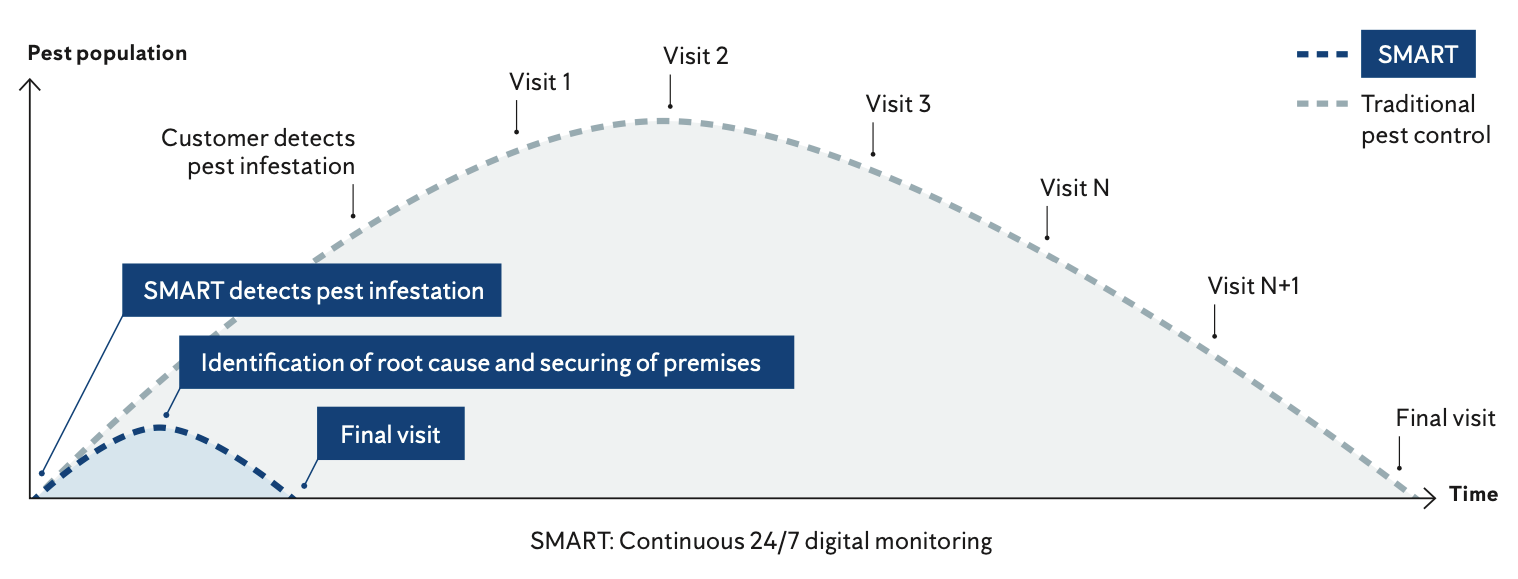
The area within the dotted lines represents the resources needed to manage a pest infestation. With earlier prevention and detection through SMART technology, infestations are prevented altogether — meaning fewer pests, fewer interventions, and less resource use. This results in a lower environmental footprint for the customer, including reduced structural damage, less food waste, and fewer resources required across sites.
Progress Scope 1, 2, and 3
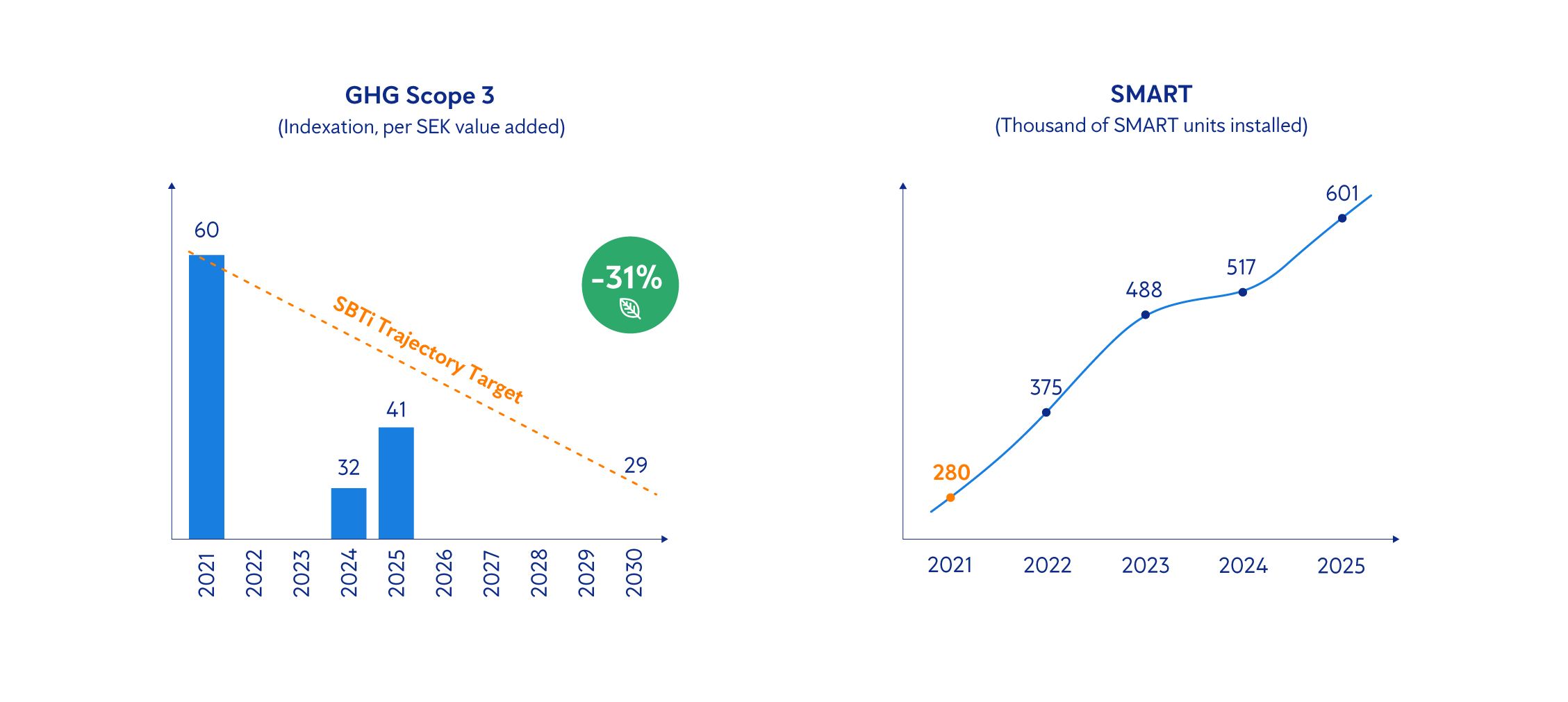
In 2025, we achieved a 23% reduction in Scope 1 and 2 greenhouse gas emissions compared with our 2021 baseline year. This progress was primarily driven by increased shared of ZLEVs and use of purchased renewable electricity across our operations.

In 2025, we achieved a 31% reduction in the Scope 3 target, measured by reductions in purchased goods and services and fuel- and energy-related activities per SEK of value added. This progress was mainly driven by increased preventive pest control, supported by Anticimex Methodology.