
Historically, urban pest control and wildlife conservation were viewed as conflicting forces. One sought to eliminate; the other sought to protect.
Today, that paradigm is shifting, driven by passionate experts who understand that cities are complex, living ecosystems.
One of such experts is biologist Eduard Durany, whose career is focused on protecting urban wildlife while reducing pest risks.
As an expert on urban biodiversity and sustainable rodent control, Durany and his team have transformed how municipalities and companies view pest management, turning what was once a blunt chemical instrument into a precise, conscious science.
Product Manager Biodiversity
His deep expertise in wildlife biology eventually led him to the pest control industry, and joining Anticimex allowed Durany to scale his conservation ideals.
Today, he serves as the Product Manager of Biodiversity and is an influential member of the Anticimex Global Technical Board.
His unique position enables him to influence internal protocols across multiple continents and support the company's commitment to reducing the use of harmful biocides.
Evident success
The success of this project has been evident since the beginning. Rat activity has dramatically decreased, while the number of non-target species has increased. The project has influenced the way the Barcelona City Council manages its green spaces by shifting the focus toward reduced chemical usage. Anticimex expects to replicate this project's success in other municipalities in the coming years.
The peregrine falcon project: from extinction to 15 pairs
Perhaps Durany’s most visually iconic work is the Peregrine Falcon Conservation Project in Barcelona, co-managed since 1998 with fellow researcher and Anticimex Spain General Director, Josep Valls.
Peregrine falcons were once entirely absent from Barcelona due to human activity, but now there are 15 breeding pairs distributed across the city. A notable pair has made its home in the towers of Antoni Gaudí’s renowned Sagrada Família. This meaningful occurrence symbolizes the merging of architecture and nature, a central theme in Gaudí’s work.
Anticimex Spain actively funds the specialized monitoring cameras trained on these nests. The project has recently been featured on a news segment dedicated to the Pope Leo XIV visit to the Sagrada Família, in which Durany educates the public on falcon behavior and their ecological benefits.
Biocontrol: an effective and natural pest control method
At the heart of Durany's philosophy is biocontrol, which utilizes natural predatory relationships to manage pest populations.
"The city is an ideal habitat for a cliff-dwelling raptor like the peregrine falcon - Durany notes - By fostering falcon populations, cities inherently deploy a natural predator against overpopulated urban pigeons”.
Durany’s work sits at the center of a complex ecological debate: the recovery of species extinct due to human activity versus those shifting due to climate change. His daily responsibilities highlight the urgent need for strict biocide alternatives and vigilant biosecurity measures due to the threat posed by invasive species.
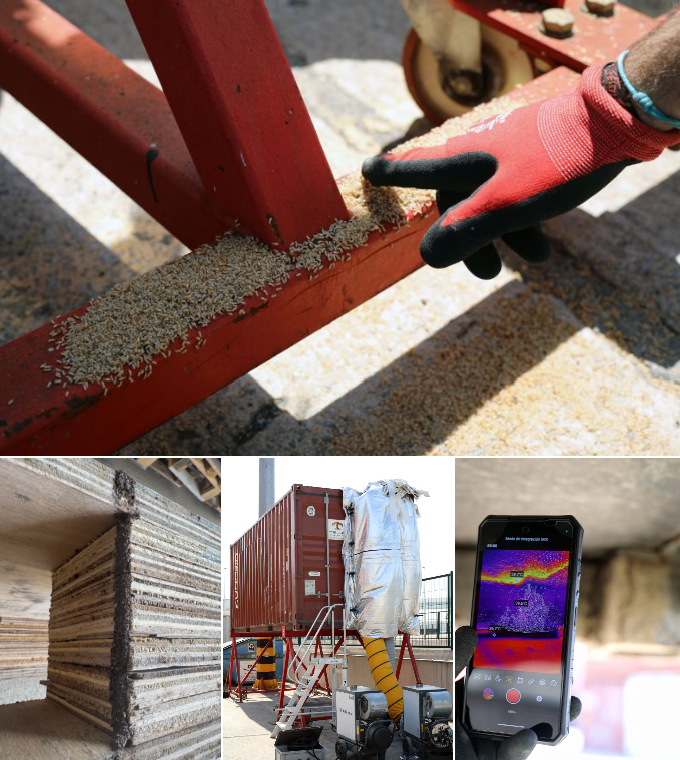
Just a few days ago, Durany was called to the Port of Barcelona together with termite expert David Mora, to inspect a shipping container suspected of harboring Formosan termites, an extremely destructive invasive termite genus not yet recorded in Spain. Identifying and neutralizing these threats at the border represents the highest level of modern urban biodiversity preservation.
The plaid for sustainable cities
Eduard Durany’s work with Anticimex and conservation organizations illustrates that the future of urban environmental health relies on specialized, data-driven methodology.
By supporting the Anticimex Group’ goal of reducing the use of harmful biocides and proving that ecological indicator species can dictate municipal protocols, Durany has elevated pest control into a branch of applied conservation biology.
His work proves that with passion, corporate backing, and scientific rigor, wildlife and citizens can coexist harmoniously.