Animal behaviour and pest biology
Håkan interprets the biological ‘why’ behind pest behaviour and translates it into practical, preventive protection strategies; the throughline of his 35-year career and self-described ‘David Attenborough’ approach to the field.
International research collaboration
He builds and runs a global technical network across national pest control associations, universities, NGOs, and environmental authorities, working directly with colleagues in Spain, the US, Portugal, and Singapore to advance preventive research.
SMART and data-driven pest control
Håkan leads the shift from rigid, schedule-based servicing to real-time, connected-device monitoring, and helps technicians adapt from instinct-led decisions to analytical, data-backed interventions.
Biocide science and environmental strategy
Håkan applies a biological background to Anticimex's sustainability efforts, driving the shift toward lower-impact biocides over traditional anticoagulants wherever efficacy is equal.
Climate change and pest industry forecasting
As our Group’s Biology Manager he tracks how shifting climate patterns are reshaping the field: invasive species like Asian hornets, accelerated pest lifecycles, and extended active seasons, and shaping how the next generation of technicians should be trained.
Animal behaviour and pest biology
Håkan interprets the biological ‘why’ behind pest behaviour and translates it into practical, preventive protection strategies; the throughline of his 35-year career and self-described ‘David Attenborough’ approach to the field.
SMART and data-driven pest control
Håkan leads the shift from rigid, schedule-based servicing to real-time, connected-device monitoring, and helps technicians adapt from instinct-led decisions to analytical, data-backed interventions.
Climate change and pest industry forecasting
As our Group’s Biology Manager he tracks how shifting climate patterns are reshaping the field: invasive species like Asian hornets, accelerated pest lifecycles, and extended active seasons, and shaping how the next generation of technicians should be trained.
International research collaboration
He builds and runs a global technical network across national pest control associations, universities, NGOs, and environmental authorities, working directly with colleagues in Spain, the US, Portugal, and Singapore to advance preventive research.
Biocide science and environmental strategy
Håkan applies a biological background to Anticimex's sustainability efforts, driving the shift toward lower-impact biocides over traditional anticoagulants wherever efficacy is equal.
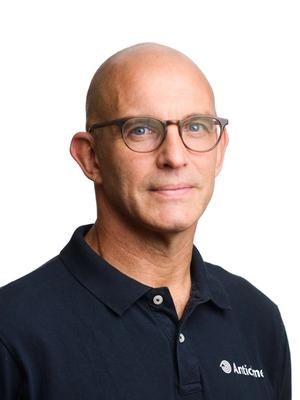
Breaking the "Rat Man" stereotype: Meet Håkan Kjellberg, Anticimex Group’s Biology Manager
If you ask Håkan Kjellberg what drove him to a 35-year career in pest control, he will point to a childhood dream: he wanted to be the David Attenborough of Sweden.
While he might not be hosting television specials from remote islands, his role as the Anticimex Group’s Biology Manager has allowed him to live out that exact passion: interpreting the secret lives of animals and translating complex biological behaviors into modern, effective protection.
Over three and a half decades, Håkan has witnessed a profound transformation. He started back when Anticimex was a local Swedish business.
Today, he sits at the technical vanguard of the world’s third-largest pest control corporation, helping guide its expansion across continents and into a true multinational force.
Yet, despite the massive scale, his core drive remains remarkably grounded: explaining the "why" behind animal behavior to technicians and customers alike.
The global think tank: collaboration and science
Håkan has long believed that pest control should be treated as a rigorous scientific discipline.
To that end, he has turned his role into a hub for international research, actively collaborating with global technical networks, national pest control associations, universities, NGOs, and environmental authorities.
He hasn't done it alone. He works alongside international colleagues such as Eduard Durany, David Mora, and Mikel Bengoa in Spain; Kathy Heinsohn in the U.S.; Joana Mateus in Portugal; and Dr. Foo in Singapore, among others, to take Anticimex’ preventive research further.
He remains a passionate advocate for internal research, constantly encouraging Anticimex employees to participate in scientific studies.
For Håkan, research isn't just about data; it’s an unmatched tool for industry networking, gaining fresh insights, and keeping the company at the cutting edge.
A greener footprint: the biology of biocides
Håkan’s biological background directly influences Anticimex’s environmental strategy, particularly the deliberate shift toward less harmful biocides like Vitamin D3 (cholecalciferol) over traditional anticoagulants for rodent control.
To understand why this matters, Håkan breaks down the science between traditional "red" and modern "green" approaches. Traditional rodenticides (anticoagulants) stay in the animal's body for long periods, increasing the risk of secondary poisoning (think of an owl preying on a rat). Safer options include cholecalciferol, a compound that is water-soluble, so it breaks down rapidly in the environment and poses a much lower risk of secondary poisoning.
Håkan advocates for the substitution principle: whenever a “greener” alternative is equally effective as a traditional chemical product, the environmentally responsible option wins.
The future: climate change and the next generation
Looking ahead, Håkan sees an industry growing rapidly in both complexity and commercial opportunity, driven heavily by climate change. Shifting global weather patterns are altering the biological landscape in real time:
- Invasive Species: New predators and pests are moving into territory they never previously occupied, such as Asian hornets disrupting European beehives.
- Accelerated Lifecycles: Warmer climates mean faster reproduction cycles and explosive population growth.
- Extended Seasons: Traditional winter lulls are shrinking as pests remain active for longer periods throughout the year.
As the environment grows more unpredictable, the need for true professionals, people genuinely interested in biology who can read and explain animal behavior, is higher than ever.
The future of the field belongs to those who don't just see a pest, but understand the nuance of context, carefully differentiating between a wild animal interacting normally with nature and an actual pest disruption.
For the next generation entering the field, Håkan’s 35-year experience leaves a clear blueprint: stay curious, look at the data, and remember that protecting human environments always starts with understanding the natural world.