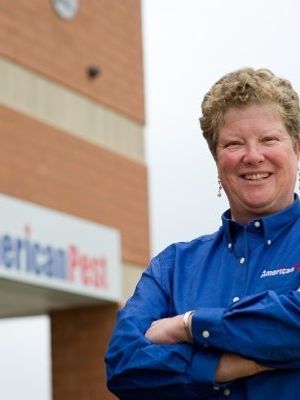
From Marine Biology to Washington D.C.: The Extraordinary Pest Management Career of Dr. Kathy Heinsohn, B.C.E.
For Dr. Kathy Heinsohn, a career in entomology wasn't the original plan. A marine biologist by training, her trajectory shifted when funding dried up, leading her to NC State where she taught freshman biology for three years. It was there that Dr. Gary Bennett of Purdue University spotted her potential and recruited her into Purdue’s prestigious PhD program.
Funded by a Swiss pharmaceutical company, her research focused on the resilient German cockroach—a pivot that laid the foundation for a remarkable career bridging private industry and public infrastructure.
Stir-Fries, Activism, and Industry History: The Purdue Years
Even during her time as a PhD student at Purdue, Kathy's innate passion for education, unique flair for engagement, and fierce leadership were on full display.
Saving Entomology Hall
While at Purdue, Kathy also found herself leading a high-stakes campaign to protect the department's physical history.
Built in 1902, Purdue’s historic Entomology Hall was a grand architectural marvel—a sister building to, and designed by the same architect as, the Chicago Museum of Art.
When the university administration announced their intention to knock down the building, Kathy mobilized. She spearheaded a passionate campaign of graduate students and tenured faculty members to block the plans, successfully saving the beloved building.
A sacred place for entomologists
Entomology Hall held a sacred place in industry lore: it was the exact site where the iconic B&G sprayer was invented.
Two World War II veterans, William Brehm and George Gilmore, designed the compressed air sprayer while working in Dr. Osmun’s urban entomology lab.
Even today, that same sprayer is still the rugged workhorse of pest control technicians around the world.
Years later, during her tenure at the National Pest Management Association (NPMA), Kathy had the profound, full-circle honor of presenting Dr. Osmun with the pinnacle of career achievement award.
Left: Kathy standing proudly on the steps of Entomology Hall alongside the legendary urban entomologist and former department chair, Dr. John Osmun, both wearing custom "Save Entomology Hall" T-shirts.
Right: Kathy presenting Dr. Osmun with the pinnacle of career achievement award.
Starting her career
After completing her PhD, Kathy went on to robust tenures at Western Pest Services (8 years as a Regional Entomologist) and NPMA (5 years), before joining American Pest, an Anticimex company, in 2010.
Recruited by Jay Nixon—who held important accounts in and around Washington, D.C.—Kathy stepped into a world where pest management intersects with famous public monuments, healthcare, and vulnerable areas.
The Great Equalizer: Serving History, Fame and Vulnerable Areas
Through her decades in the field, Kathy has developed a reputation as a master diagnostician. She views solving a pest issue much like a medical professional approaches a patient.
"I love diagnosing pest problems and through the years have developed a knack for doing it pretty well," Kathy reflects. "It's a challenge like a medical diagnosis challenge presenting with symptoms, and your job is to read the symptoms, holistically approach and narrow the cause, find the source, eliminate it, and solve the problem to makepeople’s lives better. This has always been my mission and purpose, and I find it very rewarding."
This holistic approach has granted her backstage access to an incredibly diverse array of environments, from heavy industrial plants—like tracking cigarette beetles at a massive tobacco manufacturing facility in Richmond or red flour beetles at a major brewery in Williamsburg—to sports stadiums, and critical international organizations.
Her expertise has also frequently called her to the residences of famous figures and high-profile celebrities in the Washington, D.C. metro area.
She has inspected a Supreme Court Justice’s home for termites, solved a carpenter ant issue for a legendary late-night TV news anchor, and carefully treated drywood termites nesting inside a concert pianist's beautiful instrument. When the pianist opened the door and asked what a "nice girl" was doing in pest control, Kathy simply smiled.
To Kathy, the science of pest management knows no boundaries.
Pests are a kind of poetic justice
Inside, the units were heavily loaded with cockroaches, and drug paraphernalia or handguns were sometimes visible on tables, requiring extreme caution when reaching behind appliances to avoid sharp syringes or razor blades.
Crucially, the biological impact was devastatingly human: most children present suffered from visible asthma, triggered by persistent exposure to cockroach and rodent allergens.
Having suffered from childhood asthma herself, Kathy felt a deep sense of purpose in these units.
"Pests are the great equalizer ," Kathy says. "They don't discriminate against social or economic lines and affect everyone in some way. I like that a lot about pests. Some kind of poetic justice. And yet, I want to help and make all of these people's lives easier and their public health, economic investments, and structures safer. "
Protecting Public Spaces: Monument Diagnoses
Kathy’s assignments routinely bring her to prestigious buildings and famous locations in and around Washington, D.C.
Because she is an expert at reading an ecosystem, she is frequently called to solve complex, sensitive structural challenges.
The Mid-July Monument Inspection
Every year around mid-July, a local building with a multi-storied open ceiling experiences a striking biological phenomenon.
Because the building stands as the highest point in the area, drones of various bee species (including honeybees and bumblebees) instinctively gather at the very top, creating a "drone congregation area" to sun themselves and wait for a virgin queen to fly by.
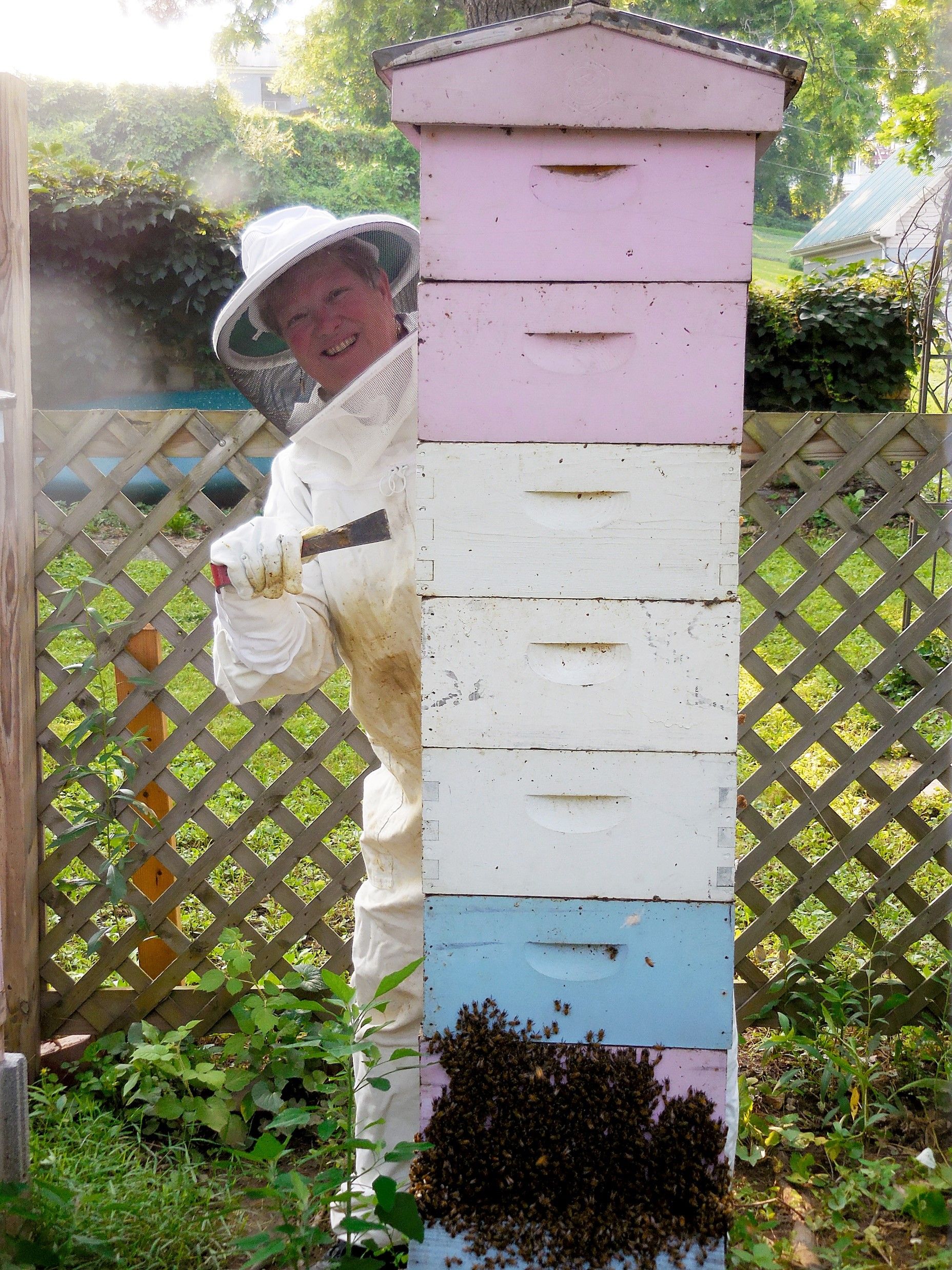
The resulting swarms used to cause panic among tourists, threatening to halt public tours. However, Kathy—who is also a backyard beekeeper—used her technical expertise to transform the annual crisis into an educational opportunity.
She explained to facility managers that because male bees lack stingers, they posed absolutely no danger to the public.
Armed with this knowledge, the facility safely kept tours running without resorting to unnecessary, aggressive chemical treatments, preserving local biodiversity.
Solving the Unsolvable
Her diagnostic knack was similarly tested at a local aquarium’s exhibit. The facility faced a unique paradox: they wanted to keep a thriving ant colony inside the natural exhibit but needed to stop them from spilling out onto the public sidewalks.
Kathy successfully established ecological boundaries to keep the ants exactly where they belonged.
Whether managing subterranean invaders near sensitive security locker rooms over a vulnerable sewer grate or completely eliminating persistent pest populations at a historic factory, Kathy consistently uncovers the hidden root causes of a structural threat.
No spray and pray fixes
Rather than relying on quick-fix spraying, Kathy launched a meticulous integrated program designed to systematically dismantle the environmental factors feeding the infestation:
- Exterior Landscaping: She identified that exterior shrubs were heavily infested with aphids, which produced a sweet honeydew that served as the primary food source for the ants.
- The Lobby: She traced a massive indoor nesting zone to $10,000 worth of heavily infested, imported tropical potted plants decorating the main lobby.
- The Emergency Room: She discovered that feral cats being fed by staff right outside the building, combined with overflowing medical sharps and serum disposal boxes inside, created a perfect storm of structural entry points and attractants.
By coordinating directly with hospital safety staff and internal facility teams, Kathy orchestrated a total environmental overhaul.
The infested plants were replaced with artificial alternatives, landscaping was treated, waste disposal protocols were tightly locked down, and the entire infestation was permanently eliminated.
A Teacher at Heart: Elevating the Industry Standard
At her core, Kathy considers her identity as an educator to be her true north.
She is a prolific writer and industry voice, with contributions spanning PCT Magazine, PMP Magazine, the Washington Post, and USA Today.
She authored the authoritative chapters on Hospitality (Chapter 12) and Government Facilities (Chapter 15) for the PCT Guide to Commercial Pest Management, and contributed heavily to the second edition of the National Pest Management Association’s (NPMA) Field Guide to Structural Pests.
One of her most recent contributions was this article about the 2026 Hantavirus outbreak.